Why the first choice matters
The first process you automate sets the tone for everything that follows. Pick one that runs often, follows clear rules and hurts when it goes wrong, and the team sees the benefit within weeks. Pick one that is rare, depends on judgement or keeps changing, and the project drags on until everyone loses interest.
Most finance teams already know which jobs they dislike. The difficulty is telling apart the jobs that are merely tedious from the jobs that are worth the effort of automating. A short scoring exercise makes that choice much easier.
Five questions to score each process
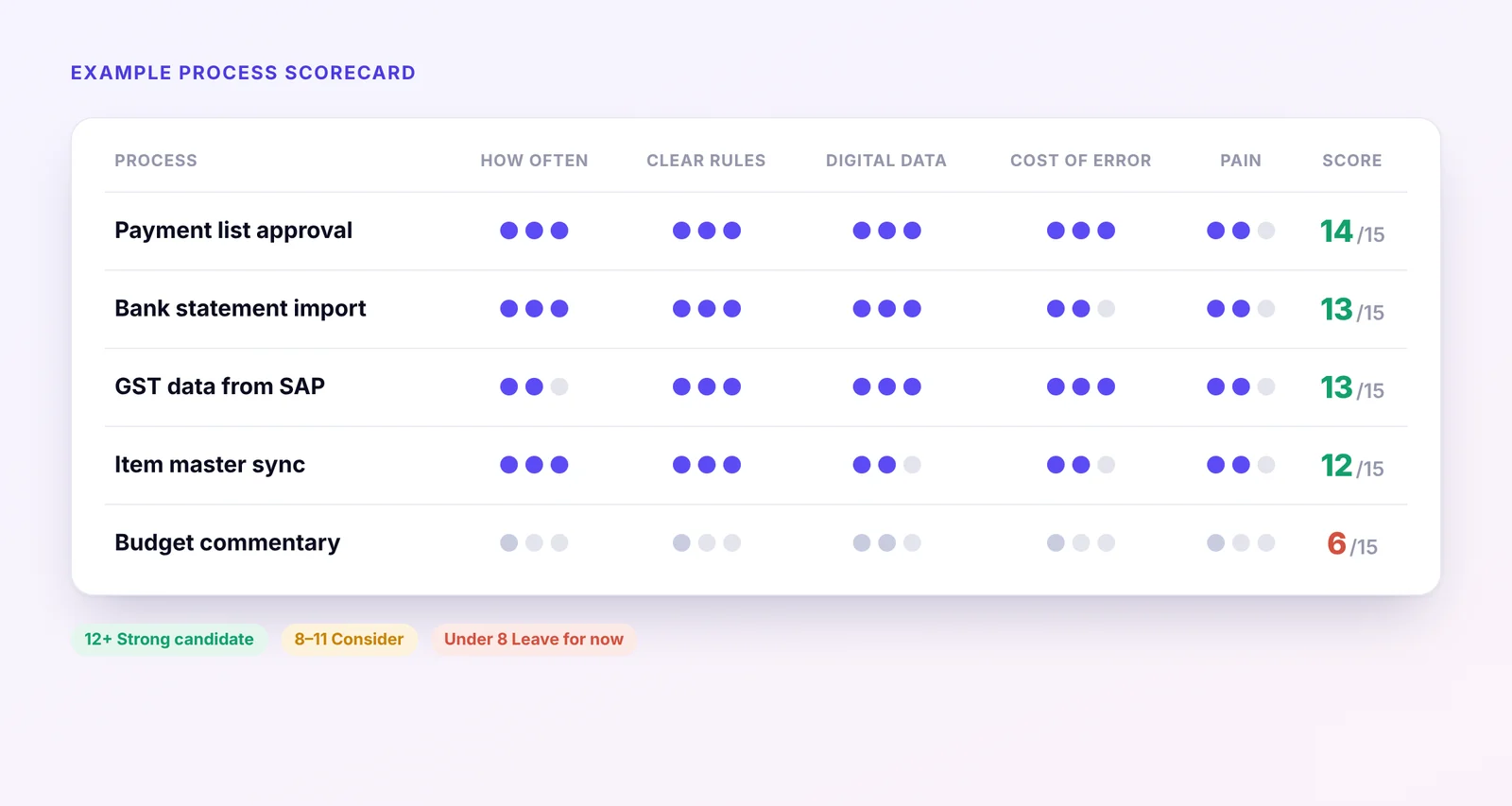
List the repetitive work your team does in a month. For each process, give a score from 1 (low) to 3 (high) against five questions.
| Question | Score it high when |
|---|---|
| How often does it run? | Daily or weekly, rather than once a quarter |
| Does it follow clear rules? | The same steps every time, with few judgement calls |
| Is the data already digital? | The information sits in SAP, Tally, Zoho, Excel or a portal, not on paper |
| What does a mistake cost? | Errors affect payments, tax, salaries or customers |
| How much pain does it cause? | It causes late nights, delays or constant follow-ups |
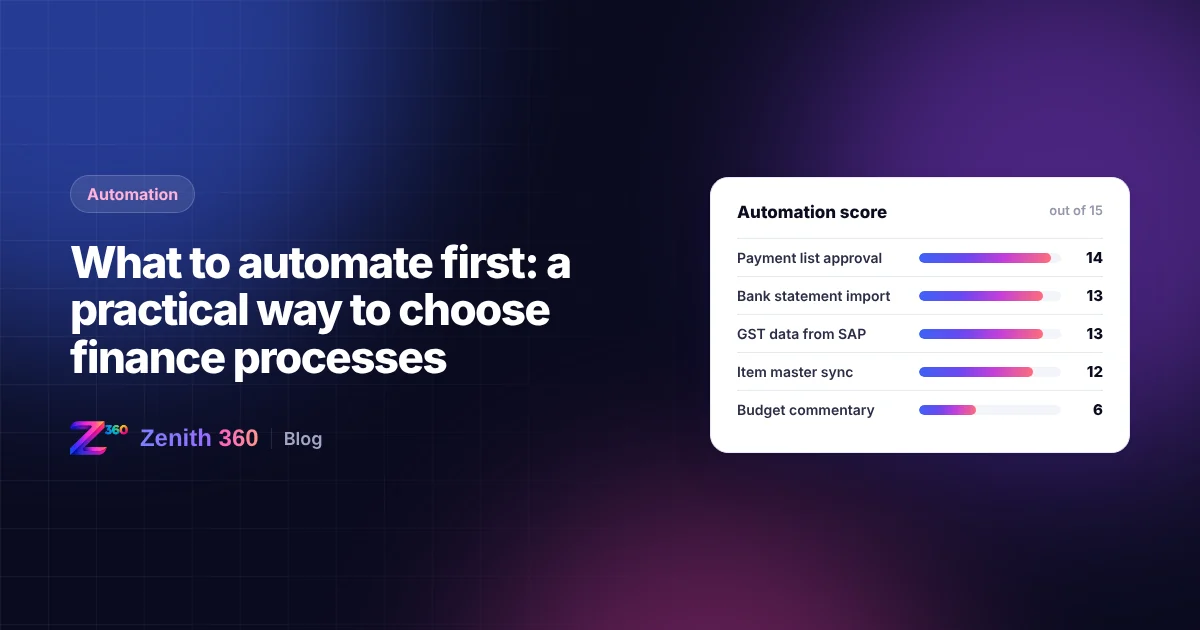
A process that scores 12 or more out of 15 is usually a strong candidate. Anything under 8 can normally wait.
Plot value against effort
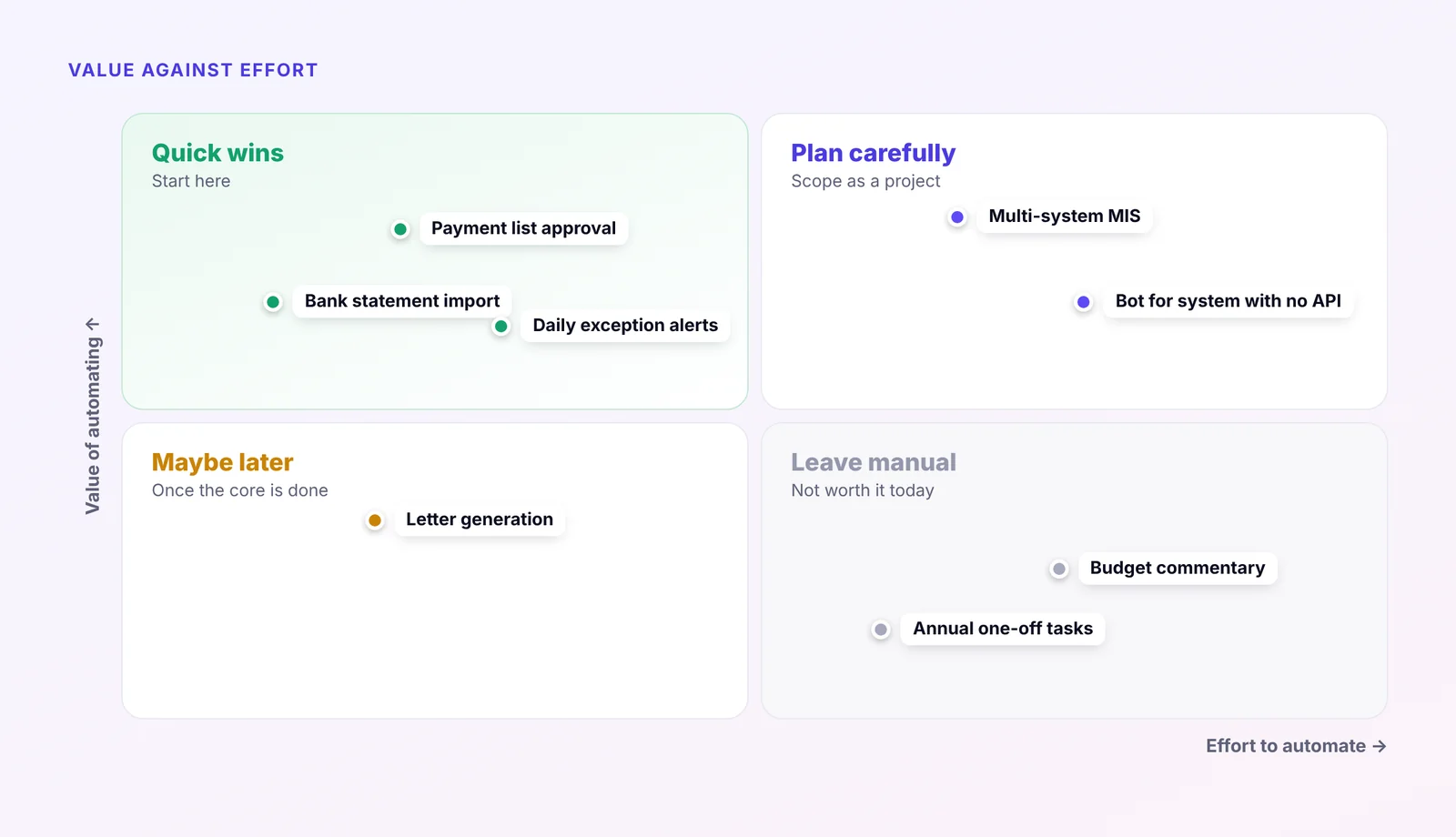
The score tells you how valuable automation would be. The second question is how hard it would be to build. A process that needs data from a system with no API, or that has many exceptions, takes more effort than one that moves clean data between two systems.
Plotting each process on a simple grid of value against effort sorts them into four groups:
- Quick wins (high value, low effort): start here.
- Plan carefully (high value, high effort): worth doing, but plan them as projects with a clear scope.
- Maybe later (low value, low effort): useful once the important work is done.
- Leave manual (low value, high effort): not worth automating today.
Good first candidates
In our experience, these processes usually land in the quick-wins corner:
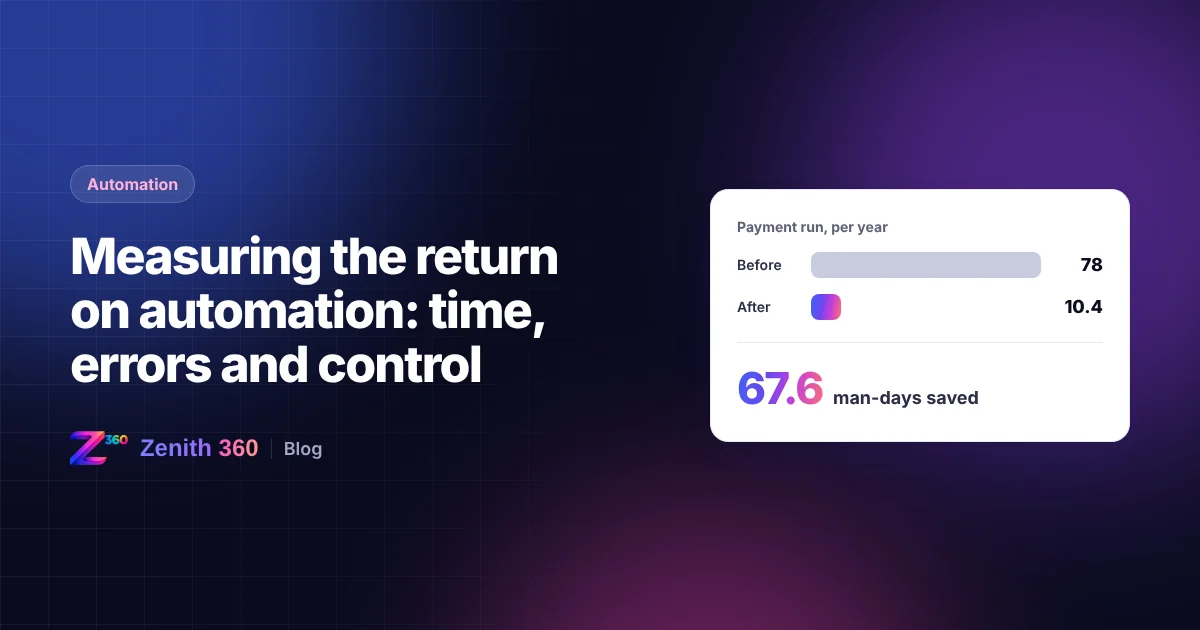
- Payment list approval and bank files. Overdue bills are pulled into a list, approved by the CFO and turned into the bank's upload file. In one payment approval project, a run that took 1.5 man-days now takes 0.2.
- Bank statement imports and matching. Statements arrive daily, and most entries match on amount, date and reference.
- GST data preparation. Extracting, sorting and splitting data by GSTIN, as in our SAP GST data case study.
- Master data sync between systems. Items, customers and vendors kept in step, as in our hospital item master case study.
- Daily MIS and exception alerts. Overdue receivables, budget overruns and unusual entries sent to the right person every morning.
What to leave for later
Some work looks repetitive but does not reward automation yet:
- tasks that depend on judgement, such as provisions, negotiations or management commentary
- processes that are about to change because of a new system or a new rule
- jobs that happen once or twice a year
- processes where nobody agrees how they work today. Fix the process first, then automate it.
Map the process before you build
Before any automation is built, spend an hour or two with the people who do the work and write down:
- Each step, in order, and who does it.
- Which system or file each step uses.
- How long each step takes and how often it runs.
- What usually goes wrong, and how it is fixed today.
- Who has to approve anything, and how that approval is recorded.
This map shows where the time goes, and it becomes the specification for the automation. It also gives you the "before" figures you need to measure the return on automation once it is live.
How Zenith 360 helps
Our process review does exactly this: we map your processes with your team, score them, and show you which ones to automate first and what each would save. Zenith 360 then routes the data from SAP, Tally or Zoho, applies the rules and approvals, and presents the results for MIS and control. Book a process review.

Aniruddha has spent more than ten years in finance, tax and business systems for Indian companies, and founded Z360 Systems to automate the work finance teams still do by hand. More about Aniruddha